
RERA in Crisis: Supreme Court Overhaul Signals Urgent Reforms for Buyers and Builders
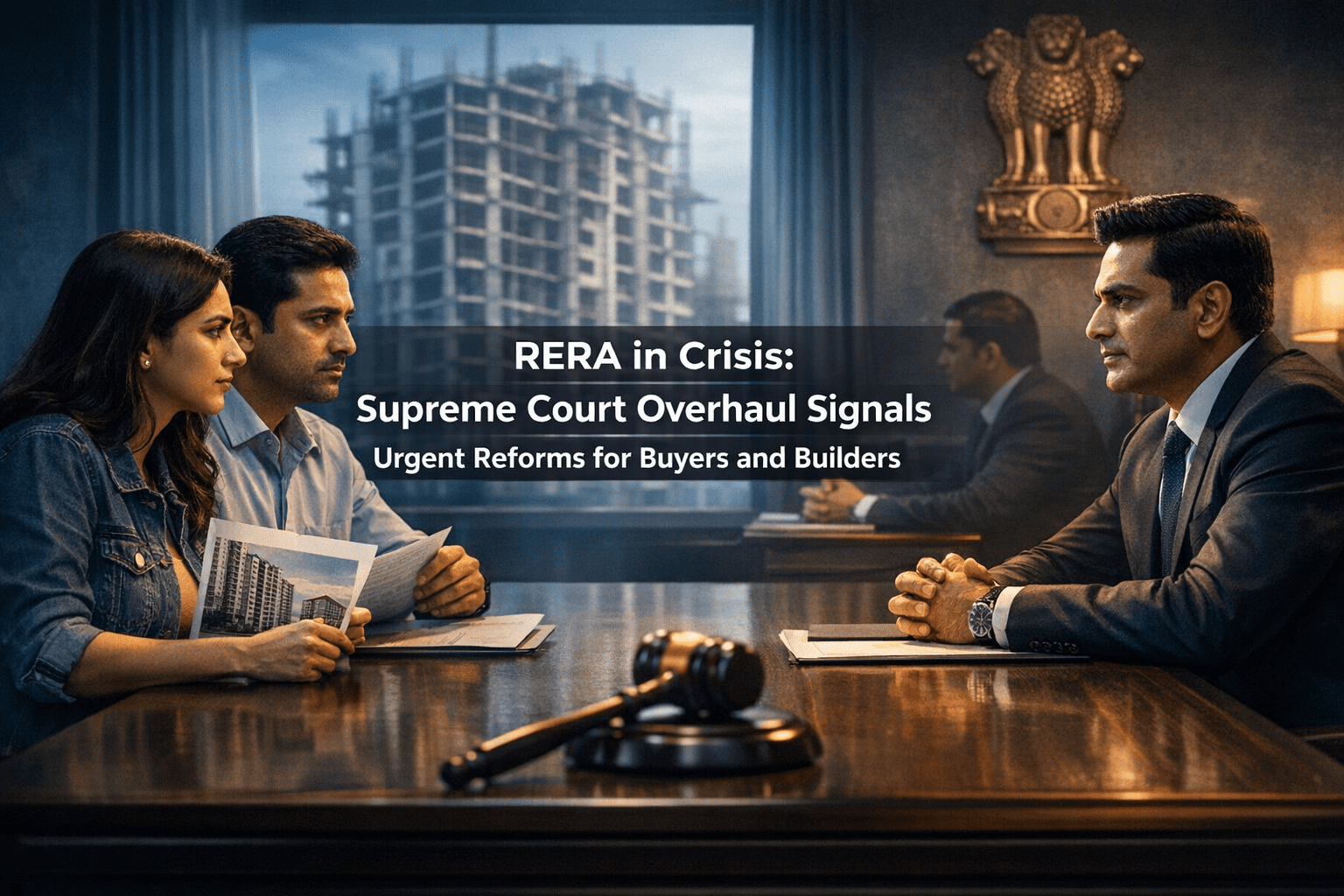
RERA in Crisis
The Supreme Court’s February 2026 observations have ignited debate on the RERA crisis in India, questioning if the Real Estate Regulatory Authority India truly protects homebuyers or favors developers. This Supreme Court RERA overhaul highlights enforcement gaps, urging stakeholders to reassess RERA homebuyers rights and RERA developers guidance. As the Indian judiciary on RERA pushes for change, understanding the RERA crisis implications is crucial for informed decisions.
What is RERA and Why the Crisis?
The Real Estate (Regulation and Development) Act, 2016, established state-level Real Estate Regulatory Authority India to promote transparency, ensure timely project delivery, and safeguard consumer rights in real estate. Originally intended to end project delivery delays RERA caused and builder-buyer disputes, it mandates project registration, escrow accounts, and quarterly updates.
However, the RERA crisis India stems from enforcement failures, with authorities accused of builder bias amid adjudication and tribunal backlogs. In states like Maharashtra and Karnataka, despite strong portals like MahaRERA, complaints pile up, eroding trust and raising questions: Is RERA worth it India? Consequently, the Supreme Court flagged these real estate regulatory challenges, noting homebuyers feel “depressed, disgusted, and disappointed.”
Supreme Court’s Key Criticisms
In February 2026, a bench led by Chief Justice Surya Kant, hearing a Himachal Pradesh case on RERA office relocation, lambasted the system. The Supreme Court RERA judgement India remarked that RERA appears to aid defaulting builders, failing its mandate and suggesting abolition if unchanged. This Supreme Court RERA overhaul calls for revisiting state authorities, highlighting statutory enforcement challenges across RERA authority states India like Delhi and Uttar Pradesh.
Moreover, the Court emphasized governance risk for developers and gaps in regulatory authority oversight, urging RERA amendments 2025/2026 to address builder favoritism. These observations from the Indian judiciary on RERA underscore the need for regulatory reform analysis, as High Court RERA rulings India have echoed similar concerns. Therefore, real estate law in India faces a pivotal moment.
Impact on Homebuyers
The RERA crisis implications hit homebuyers hardest, weakening RERA homebuyers rights amid project escrow account requirements often ignored. With urban housing delivery delays RERA promised to fix persisting, buyers face prolonged waits without swift RERA dispute resolution. For instance, in Maharashtra RERA tribunal India cases, backlogs delay compensation, amplifying real estate risk factors.
Yet, consumer rights in real estate persist via alternatives: consumer forums under the Consumer Protection Act offer faster relief for delays, while civil suits enforce specific performance. Criminal complaints arise for cheating under IPC Section 420 if fraud is proven. Thus, homebuyer protection legal tips include verifying RERA registration pre-booking and pursuing multi-forum remedies when RERA fails.
Pre-RERA vs Post-RERA (with Enforcement Gaps) for Homebuyers
Pre-RERA vs Post-RERA (with Enforcement Gaps) for Homebuyers |
|---|
Aspect |
Project Transparency |
Delay Compensation |
Dispute Resolution |
Buyer Awareness Need |
Impact on Developers
Developers face heightened scrutiny under the Supreme Court RERA overhaul, with RERA developers guidance demanding stricter real estate legal compliance India. Project delivery delays RERA penalties rise, alongside escrow mandates tying 70% funds, increasing compliance costs by 8-12%. In states like Karnataka, KRERA’s rigorous checks expose governance risk for developers via penalties for non-disclosure.
Furthermore, developer compensation claims India grow as buyers leverage RERA dispute resolution, pushing for arbitration and dispute resolution alternatives. Legal risk mitigation India now requires robust statutory compliance timelines to avoid RERA tribunal India summons. As a result, forward-thinking builders view this as a call for ethical practices amid RERA crisis India.
Developer Risks: Pre- vs Post-Supreme Court Remarks |
|---|
Risk Area |
Funding Access |
Penalty Exposure |
Dispute Volume |
Compliance Burden |
What Changes Does the Supreme Court Want?
The Supreme Court RERA judgement India demands stronger enforcement, not abolition, targeting what changes Supreme Court wants in RERA like unbiased adjudication. It critiques RERA authority states India for favoring promoters, calling for reduced tribunal backlogs and real buyer compensation framework. High Court RERA rulings India in Delhi reinforce this, stressing uniform implementation.
Additionally, RERA amendments 2025/2026 could enhance oversight, aligning with consumer protection jurisprudence. Impact of RERA crisis on property investments looms if ignored, yet reform promises stability. Hence, stakeholders must prioritize these shifts.
Stakeholder Action Steps
Homebuyers should follow what homebuyers must do post RERA overhaul: demand verified RERA portals, cross-check approvals, and prepare for consumer forums if needed. Is RERA still effective for buyers India? Partially, but diversify remedies like civil suits for possession.
Developers need how developers should prepare for RERA reform: implement compliance checklist RERA with digital tracking and escrow audits. Both benefit from due diligence—buyers via title searches, developers via transparent contracts—to mitigate builder buyer dispute mechanism failures.
Compliance Checklist RERA
- Verify state RERA registration and updates.
- Review escrow account requirements compliance.
- Track statutory compliance timelines quarterly.
- Document all promises in agreements.
- Prepare for RERA dispute resolution or appeals.
FAQs
Is RERA Still Enforceable in India?
Yes, but Supreme Court flags enforcement gaps; buyers should use it alongside consumer forums.
Can Developers Face Penalties Under Reforms?
Absolutely—stricter for delays, with developer compensation claims India rising via tribunals.
What Should Buyers Verify Before Booking?
RERA registration, approvals, timelines, and escrow proofs, especially in Maharashtra or Delhi.
How Does Indian Judiciary View RERA?
Critically, pushing Supreme Court RERA overhaul for better homebuyer protection.
In summary, the RERA crisis India demands proactive steps amid Supreme Court RERA overhaul. Stay informed on RERA homebuyers rights and RERA developers guidance to navigate real estate law in India effectively. For general insights, review official RERA portals.
Disclaimer: This blog post is for informational purposes only and does not constitute legal advice. Consult qualified professionals for specific matters.
Know More About Advocate Meet Kakadia